


Global growth: photovoltaics and energy storage
IEA and BloombergNEF scenarios place global installed photovoltaic capacity between 5 and 7 TW by 2030, with the strongest growth in Asia, Europe, and North America. This expansion makes solar photovoltaics the definitive choice for energy planners.
Tripling global renewable capacity by 2030 requires a massive scale-up of energy storage. BloombergNEF and the IEA agree: battery energy storage capacity will increase almost tenfold between 2023 and 2030, from 85 GW to nearly 800 GW. Considering all storage technologies, the IEA projects a total of 1,500 GW worldwide, with China, North America, and the European Union as the main hubs.
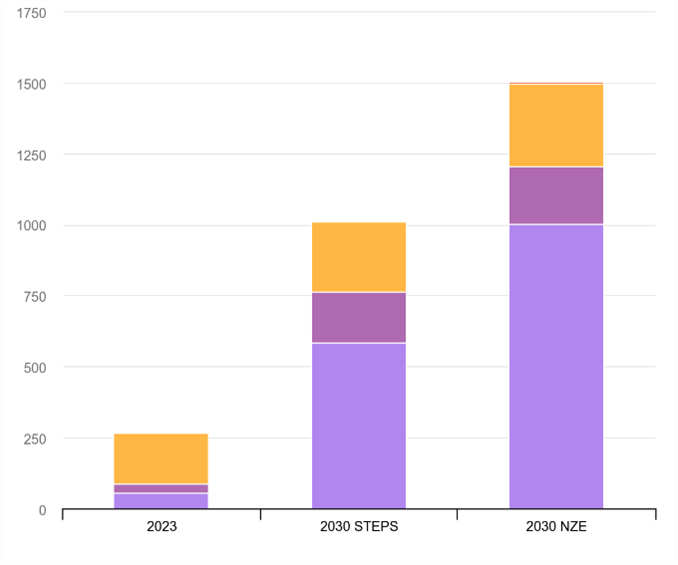
Source: IEA (2024), Global installed energy storage capacity by scenario, 2023 and 2030, IEA, Paris.Without a robust deployment of energy storage systems, renewable expansion and the goal of tripling capacity by 2030 (Paris Agreements) could stall.
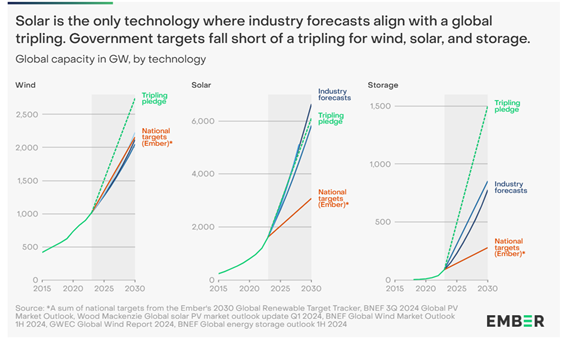
Tendencias 2026 en almacenamiento en baterías: Capacidad global de almacenamiento en baterías, por tecnologías. Evolución 2015-2023. Fuente: EMBER, 2024. | 2026 Trends in Battery Storage: Global Battery Storage Capacity by Technology. Evolution 2015–2023. Source: EMBER, 2024.
Hybridization: the new horizon for energy storage
The combination of solar and wind generation with battery energy storage marks the next phase of the energy transition. From Australia to Spain, hybridization is emerging as the dominant model for stable, efficient, and cost-effective renewable generation.
In California, Australia, and Germany, solar-plus-storage systems are already displacing gas-fired plants for peak demand management. This trend mitigates the impact of negative pricing and ensures supply during night-time hours or periods of low solar irradiation.
2026: the turning point for battery energy storage
By 2026, hybridization will evolve from a complementary option into a global operational standard, driven by a historic milestone: annual battery energy storage additions will exceed 100 GW for the first time.
According to BloombergNEF and S&P Global, the sector will enter a “new dynamic”. Despite the first projected annual contraction in solar installations in two decades (–0.9% to 649 GW, driven by regulatory changes in China and the United States), large-scale BESS (Battery Energy Storage Systems) integration will become essential to ensure project bankability amid price cannibalization and increasing curtailment.
Utility-scale storage will definitively surpass residential storage in Europe and the Middle East, forming the backbone of a more flexible and resilient power system.
In 2026, Europe, the Middle East, and Africa (EMEA) will overtake the Americas in annual hybrid storage installations, with projects achieving discharge durations of up to eight hours in the United Kingdom and Australia.
Hybridization will be natively integrated into corporate Power Purchase Agreements (PPAs), accounting for 30% of global renewable expansion by the end of 2026 and consolidating energy storage as a key financial hedging tool.
BESS: a grid stability asset
BESS (Battery Energy Storage Systems) play a critical role in strengthening power system security across all markets. With increasing electrification and variable generation, battery storage provides short-term flexibility, enabling system operators to meet peak demand reliably.
Its fast and precise response—within seconds—makes it an ideal solution for grid stability support. Energy storage also serves as a critical backup power source during outages or emergencies, ensuring uninterrupted supply to hospitals, emergency response centres, data centres, and other critical infrastructure.
BloombergNEF reports indicate that from 2025 onwards, the majority of utility-scale BESS revenues will come from grid services (voltage control, frequency regulation, and congestion management). This is particularly relevant in Europe, where the decline of synchronous generation is reducing system inertia.
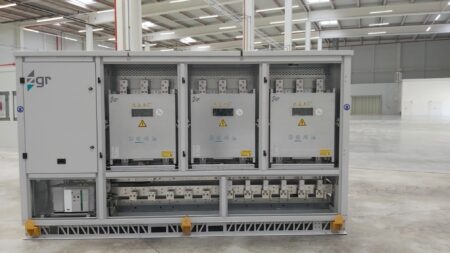
ZGR Corporación’s 4,500 kW PCS
Technological evolution: Lithium and Sodium batteries
The IEA estimates that advances in battery chemistry and manufacturing processes will reduce global average lithium-ion battery costs by a further 40% between 2023 and 2030, while improving energy density and cycle life.
LFP (Lithium Iron Phosphate) batteries are expected to reach their peak with a market share close to 93%, benefiting from system costs that BloombergNEF estimates at USD 117/kWh. This cost level allows “solar + storage” solutions to compete directly with gas-fired power plants.
Sodium batteries: an emerging alternative
Alongside the dominance of lithium-ion technology, sodium-based batteries are beginning to be deployed in commercial stationary applications. Although their energy density is lower, they offer key advantages: abundant raw materials, improved thermal stability, and the potential for enhanced safety.
Looking towards 2026, sodium batteries will complement lithium-based solutions in industrial and grid-scale BESS, reinforcing a key concept: power electronics must be versatile enough to adapt to different battery chemistries and operational dynamics.
Central Inverters and grid-forming: the new standard
ENTSO-E and European TSOs are clear: the power system requires assets capable of forming the grid, not merely following it. Grid-forming functionality will evolve from an advanced feature to a structural requirement for large-scale renewable and BESS installations from 2026 onwards.
Central inverters are evolving into active platforms for voltage and frequency control, which is particularly relevant in weak grids, hybrid systems, and industrial environments.
Electro-intensive industry: storage and power quality
For electro-intensive industries, the value of energy storage lies not only in energy supply, but in the protection of mission-critical processes. European studies show that most industrial losses associated with electrical events are caused by voltage sags and short-duration disturbances.
By 2026, the discussion will focus on power quality and energy resilience amid grid instability driven by high renewable penetration. The integration of DVR (Dynamic Voltage Restorer) solutions with BESS equipment can ensure a resilient grid, capable of responding within milliseconds to disturbances in modern power systems.
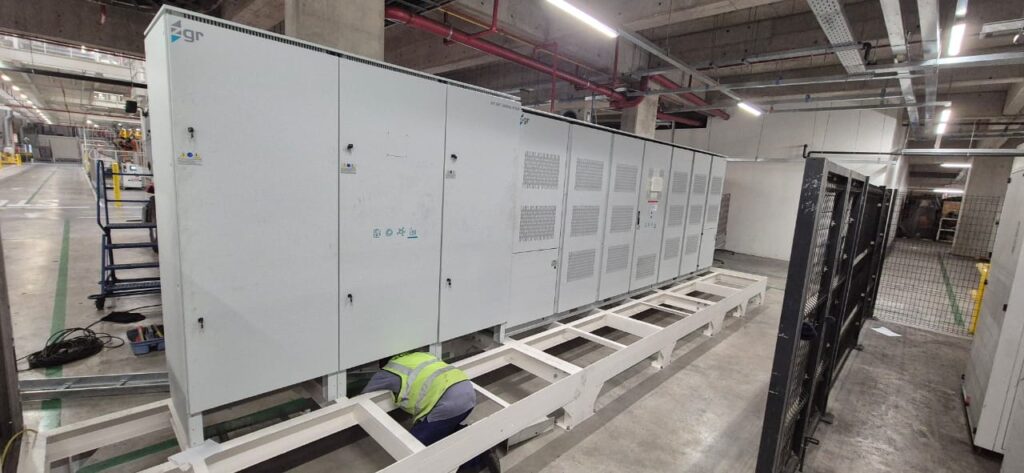
Instalación de un DVR de alta potencia de ZGR Corporación en una planta industrial. | EN ZGR Corporación high-power DVR installation at an industrial plant.
ZGR Corporación: solutions aligned with energy storage trends
In this context of technological convergence, expertise in advanced power electronics and power quality becomes a pivotal factor.
PCS 3,000 and 4,500 kW
ZGR’s Power Conversion Systems (PCS) are designed for utility-scale and industrial BESS applications. They operate at 1,500 V DC and feature a modular design for enhanced scalability. They stand out for their high productivity, efficiency, and flexibility. ZGR has incorporated grid-forming capabilities, allowing these PCS units to actively contribute to power system stability.
DVR: Dynamic Voltage Protection
ZGR’s DVR solutions provide dynamic protection against voltage sags and fast disturbances—critical for electro-intensive industries where voltage-related financial losses can be severe.
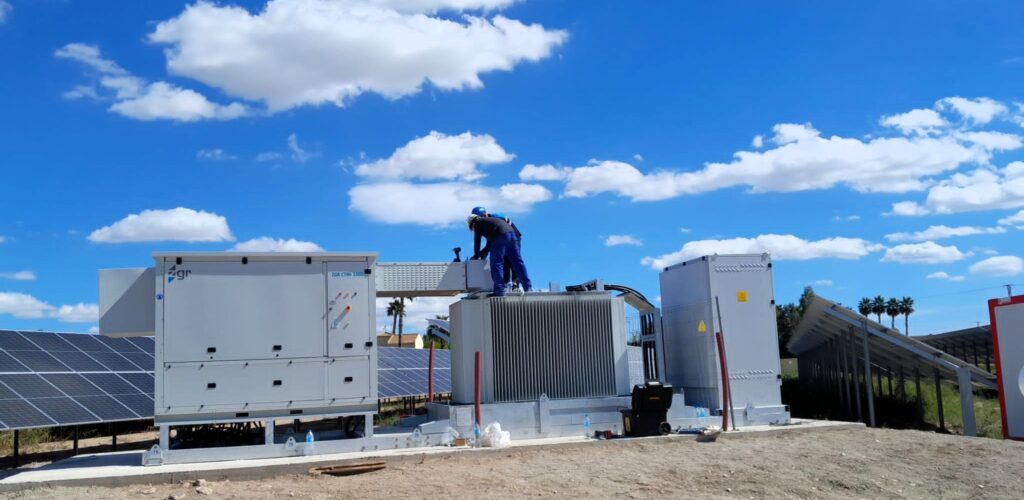
ZGR Corporación central inverter during installation at a photovoltaic plant
CTR: Precise grid control
ZGR’s 3,000 and 4,500 kW CTR units enable precise voltage and reactive power control, particularly relevant in grids with high renewable penetration and variable loads. They include ZGR ISLANDET, a non-intrusive weak-grid detection system that avoids the common positive feedback method, which can cause instability and compromise power quality.
This synergy of energy storage, advanced central inverters, dynamic control, and power quality places ZGR Corporación at the core of the new energy model.
Energy storage as the foundation of the 2026 power system
The 2026 trends in battery energy storage point to a more demanding, faster, and highly interconnected power system. Energy storage, supported by advanced power electronics, is becoming the technical foundation for renewable integration, grid stabilisation, and the protection of critical industrial processes.
At ZGR Corporación, we are committed to innovation as a key differentiator. Our modular design and proprietary European technology make us strategic partners, delivering bespoke, high-value solutions for every project.
Your energy, our challenge.
To stay up to date with our latest news, subscribe to our newsletter and join our community of power electronics enthusiasts on LinkedIn.


