

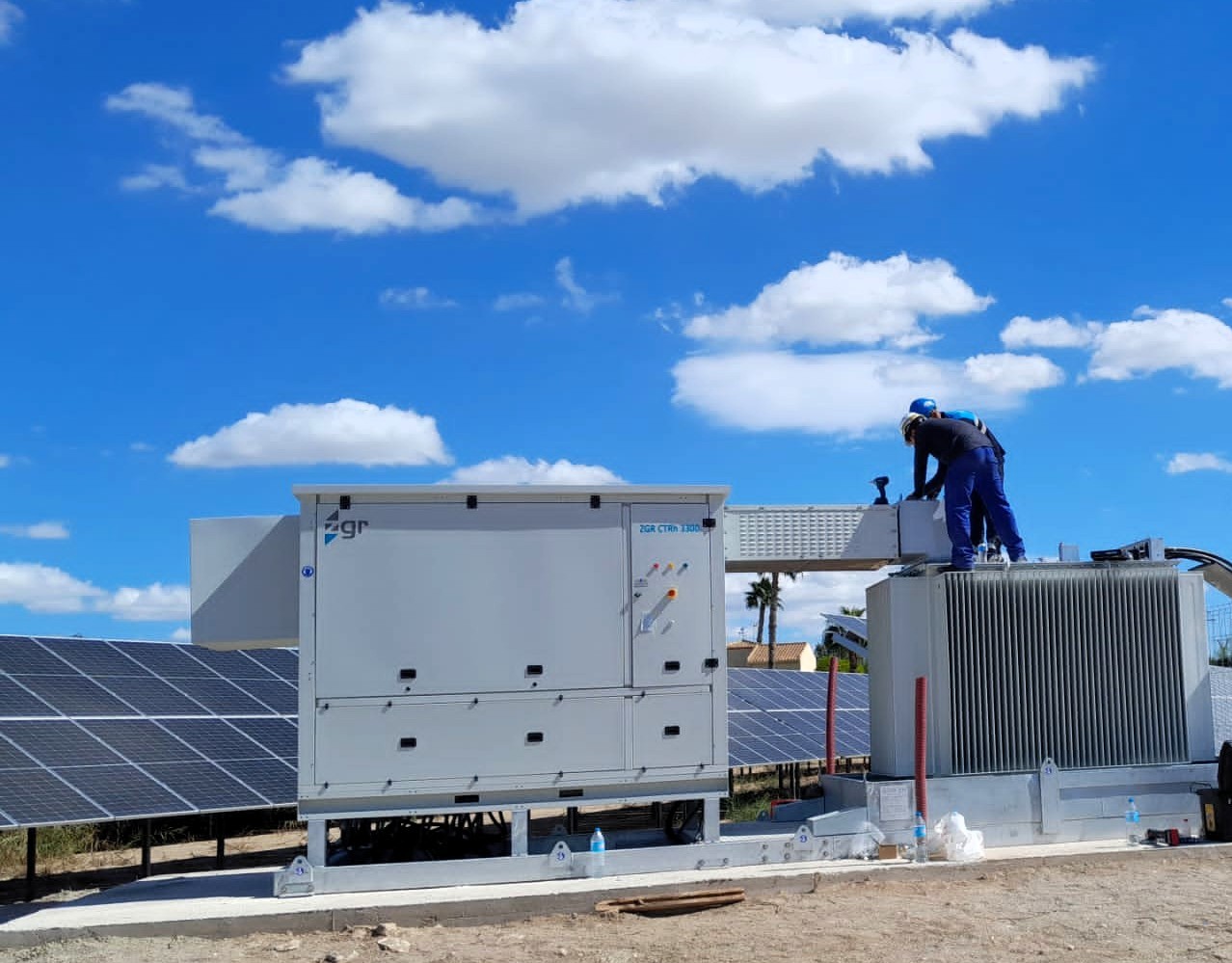
The evolution of Central Inverters in Utility Scale Projects
Traditionally, central inverters were designed as high-power monolithic units. While this approach simplified the initial electrical layout, it introduced a significant risk: any internal fault could lead to a complete system shutdown lasting hours or even days. In Utility Scale plants, where each inverter manages several megawatts of power, this scenario can result in substantial financial losses.
To address this issue, manufacturers have shifted towards modular architectures that divide the total power capacity into independent functional units. This evolution is not only technological but also strategic, turning the central inverter into a risk-mitigating component.
Modular design as a risk management tool
Modular central inverter design distributes the total power capacity across multiple autonomous modules. In the case of the ZGR CTR 3000 kW, this architecture is implemented through four independent 750 kW power modules integrated into a single unit.
From the perspective of EPCs and project developers, this modular design effectively mitigates one of the project’s primary risks: total inverter downtime. A failure in one module does not result in a full shutdown, but only a partial power reduction, while the remaining modules continue operating.
Why modular design reduces downtime?
Unlike conventional central inverters, where a malfunction can cause a complete stop of 8 to 72 hours, a modular central inverter maintains energy generation even during partial faults. If one module fails, the others continue feeding power into the grid.
This approach significantly increases operational availability. In Utility Scale projects, this translates into higher annual energy yield and a substantial reduction in the financial risk associated with inverter downtime.
Modularity and local Technical Support: an indivisible pair
Modularity alone is not enough to guarantee operational continuity. Its true value is unlocked when paired with fast, qualified local technical support.
ZGR Corporación provides a specialized technical service capable of responding within 24 to 48 hours nationwide. Local support ensures accurate diagnostics, on-site interventions, and immediate module swap-outs.
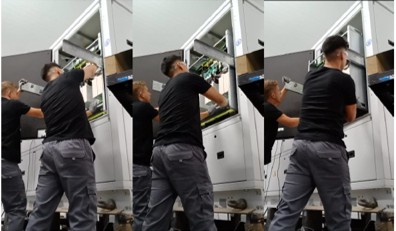
Replacing a power module in the ZGR CTR 3000 kW can be done in under 30 minutes by qualified personnel, drastically reducing downtime and preventing extended inverter outages.
A power module in the ZGR CTR 3000 kW can be swapped in under 30 minutes.
Streamlined maintenance and reduced operating costs
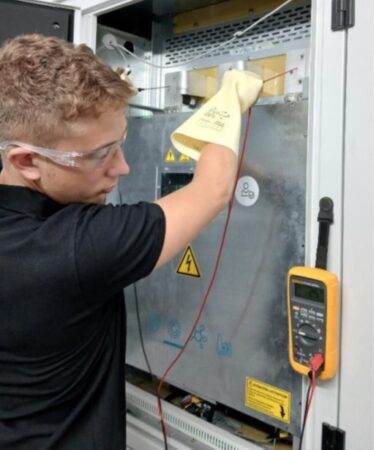
One of the most tangible benefits of modular design is simplified maintenance. Since interventions are performed on individual modules, complex operations typical of monolithic systems are avoided.
One of the key advantages of modular design is simplified maintenance workflows.
This leads to lower intervention time and costs, reduces dependency on highly specialized external resources, and improves maintenance planning.
“A good technical support service focuses on maximizing equipment availability. At ZGR Corporación, we take this seriously—our clients truly value our technical service,” says Odilo Alonso, Head of Technical Support at ZGR Corporación.
Advanced monitoring and predictive maintenance
The ZGR CTR 3000 kW inverter features advanced monitoring systems that allow real-time supervision of critical parameters for each power module and the overall system.
By leveraging this data, it is possible to detect anomalies before they escalate into critical failures, allowing for preventive actions that reduce production impact.
Technical flexibility and long-term adaptability
Given that each PV plant operates under unique environmental, electrical, and regulatory conditions, a modular design allows for functional adjustments and greater flexibility to accommodate future changes.
Each PV plant has unique operational conditions. Modular design enables functional adaptability and increased flexibility for future upgrades.
Moreover, this modularity allows the inverter to adapt to potential grid code updates without requiring a full system replacement—protecting the long-term investment.
Economic impact in Utility Scale PV projects
The combination of continuous operation, streamlined maintenance, and local support has a direct impact on the project’s financial performance indicators.
Reduced losses from downtime and improved maintenance planning help control OPEX and optimize CAPEX throughout the asset’s lifecycle.
Technical Service throughout the Inverter’s lifecycle
ZGR enhances the modular design of the CTR 3000 kW with a full suite of technical services aimed at maximizing equipment availability and reliability.
These services include expert commissioning, hands-on technical training for local operators, tailored preventive and corrective maintenance plans, and comprehensive spare part and module logistics.
In Utility Scale photovoltaic projects, modular design has become a critical requirement to ensure operational continuity and asset profitability.
The ZGR CTR 3000 kW, backed by expert local support, offers a solution designed to reduce risk, optimize maintenance, and maximize energy output throughout the plant’s lifetime. And when combined with ZGR PCS 3000 kW storage systems—compatible with its components—it becomes the ideal solution for EPCs and Utility Scale developers seeking high productivity, reliability, and flexibility.
At ZGR Corporación, your energy is our challenge.
To request a free initial technical audit, contact our technical team.
Want to stay updated on ZGR innovations? Subscribe to our newsletter and join the Power Electronics community on LinkedIn.


